

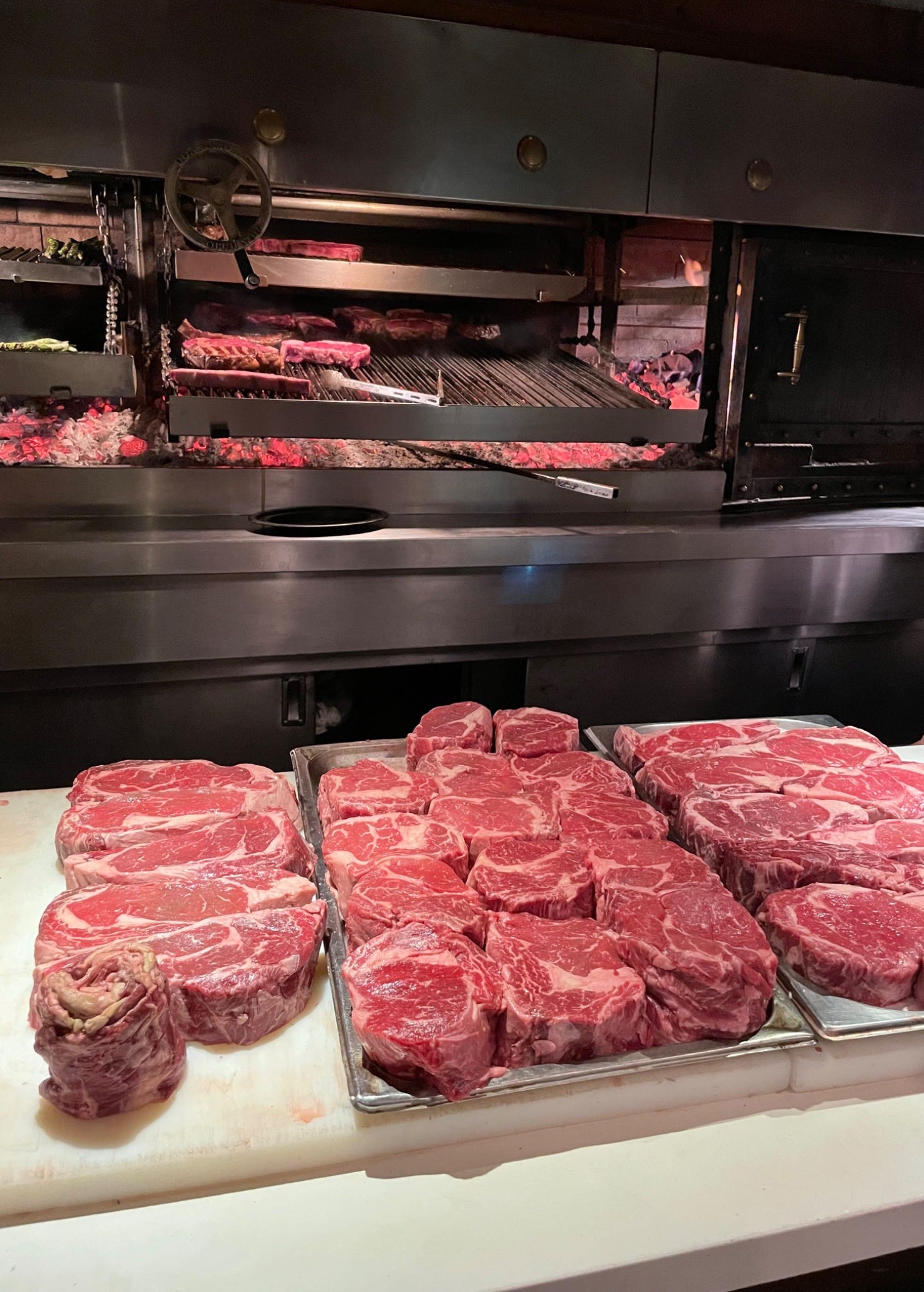
A5 wagyu, 60 dollars an ounce with a 4 ounce minimum.
Bring us 12 oz shared for the table.
U-2 shrimp from Nigeria, two to a pound. Make it a scampi for our surf and turf.
Who raises this beef the best and can we buy the whole farm?
Protein was the focus of almost every plate.
Not just type, but where it was from and how expensive it was.
Sometimes the objective was different. The goal was how much we can get for the lowest possible price.
We searched exhaustively for the most delicious versions of things.
How do we procure as much as possible of items limited and rare?
All types of caviar, closest to Beluga without being illegal.
This methodology brings you to a completely different place than health.
The word protein comes from the Greek proteios, meaning ‘primary’ or ‘of the first rank.’
Protein is like our retirement.
How much should you save for retirement?
The real question is, how much should you save for the future you want? We all know we are supposed to save money. Yet 39% of American adults say the largest emergency expense they could cover using only their savings is less than $1,000.1
Protein is the same. Everyone knows it’s important.
Saying that I eat protein is not the same as, am I getting enough to support the body that I want to keep?
The new U.S. Dietary Guidelines recommend a target of 1.2 to 1.6 grams of protein per kilogram of body weight for adults.2 For some older adults, that would be a substantial change. In a pooled study of adults 55 and older, about 7 out of every 10 adults are not hitting even the low point of 1.2g/kg.3
That recommendation is higher than the longstanding international benchmark around 0.8 g/kg.4 I don’t think a new guideline means everyone should automatically change what they eat.
Protein is important.
But what does it do for you besides help with muscles?
How about supporting immune function, helping build and repair tissues, providing the amino acids used to make enzymes and hormones, contributing to overall bone health, and helping preserve lean tissue during weight loss.5
Protein also helps us with satiety. Higher protein meals usually leave us feeling fuller than low-protein meals, which can make managing appetite much easier.6
Doing the protein math is easy. Deciding which number to use takes a little bit more thought.
Once you do the quick math and calculate your goals, you don’t need to obsess over the recalculations daily.
Just be consistent.
Protein needs can change as we age, grow, train, become ill, cut calories, or move into other stages of our life.
For women, the equation can change at different stages of life. Pregnancy, low energy availability, and the transition through perimenopause and menopause are times when paying closer attention to nutrition, protein and maintaining muscle become equally important.7
Protein can’t do this job alone.
Resistance training becomes important as we age because keeping muscle requires both raw material and giving the body the reason to use it. Protein supplies the amino acids, but resistance training can supply the stimulus. If you want to maintain strength and function, I would put the two together rather than treating them separately.
Protein quality matters. Protein quantity is imperative.
WHEN THE MATH CHANGED
When I started to look at what protein meant for me, the math started to look different. I looked to change a life full of excess and imbalance. Success was addressed one thing at a time.
I figured out how to get my sleep in line and then really needed to start examining my diet.
My diet revolved around my incredible access to great food but often at the detriment of my health. My job was to know everything that was being served, prepared and how it tasted in every outlet of three hotels totaling 6,926 rooms!
So I broke down each major protein: chicken, pork, beef, lamb, soy (tofu/edamame), fish, shellfish, beans, lentils, dairy, eggs, chickpeas, etc.
Here’s a quick cheat sheet for you -
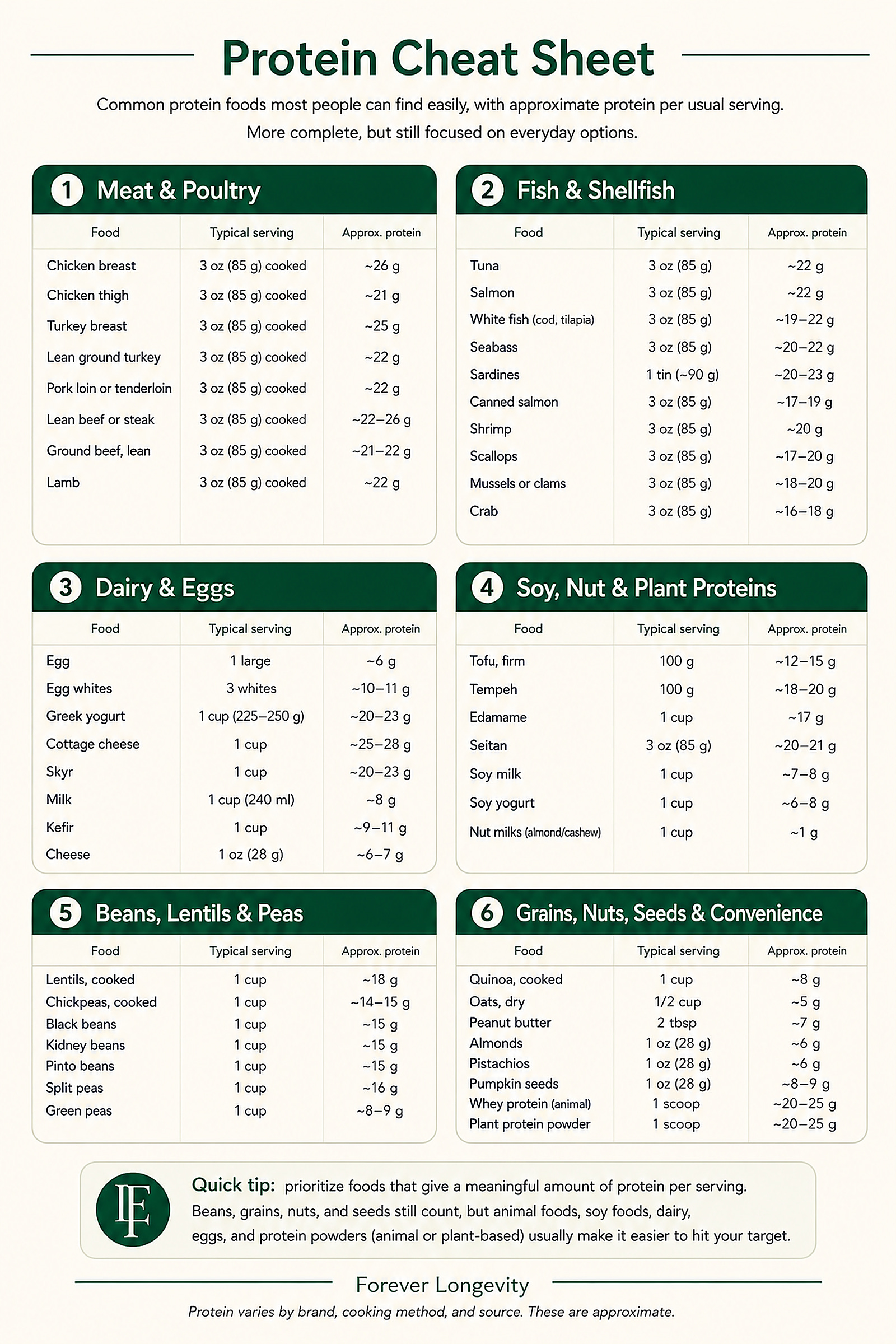
I like almost anything (except salmon), so this list wasn’t scary and easy to vary. I also knew that I had the skills to make anything delicious. I used the access I had to chefs and gleaned ideas from them too. One of the perks of hospitality.
But I had to make a plan.
So here’s what I did to make it consistent.
I knew a diet or temporary change wasn’t going to work. I needed a number I could build my meals around.
The longstanding international benchmark is around 0.8 g per kilogram, while the new U.S. Dietary Guidelines target 1.2 to 1.6 grams per kilogram. I wasn’t looking for a number simply because a guideline told me to eat it.
I looked at my resistance training, activity, and goal of maintaining muscle as I age. Based on that, I chose 1.4 grams per kilogram. A level within the range supported by research on protein intake and resistance training. At my body weight that came to about 130 grams of protein per day.8
Then I started figuring out how I could reach that goal. I tracked it for the first couple of weeks and then was able to use my chef brain to convert it and just wrote down the total each day to ensure I was getting it. (Recommend to keep track if a chef brain is missing)
Let me illustrate what success looks like:
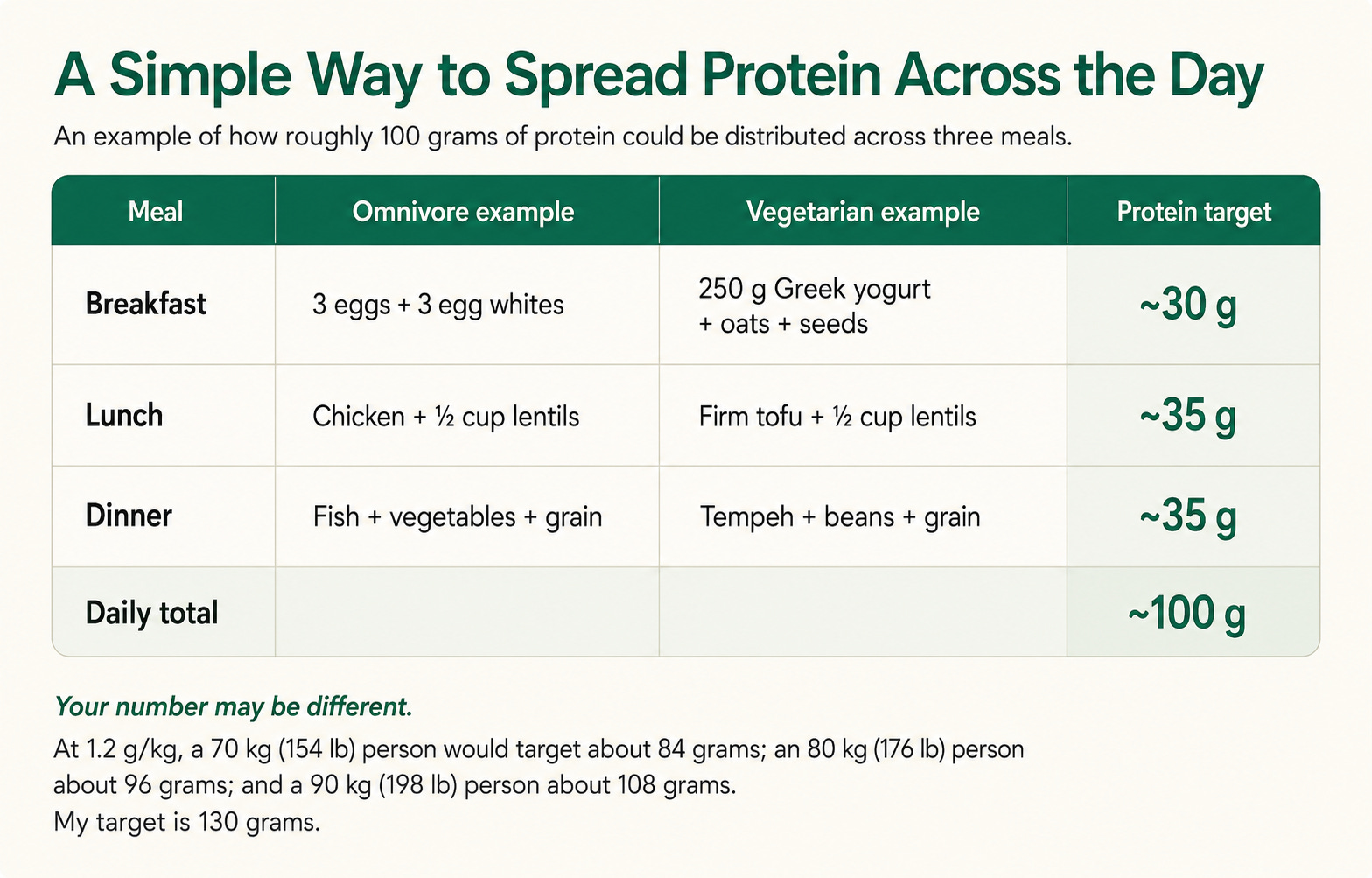
This did feel like a lot more food at first. But quickly, it felt normal.
When I started to eat more of the food I wanted to prioritize, I realized how many of my previous calories were coming from foods that were empty and not helping me reach my goals.
It was important to get my wife’s buy-in. Getting your household on board makes consistency much easier.
Making meals for my wife and me became easier after building a protein chart. You will be able to get a good measure quickly even when dining out after looking at this chart quickly every day before a meal.
Want a quick reference? Download the FL - Protein Cheat Sheet
The other thing to note is that if you work out, giving yourself just protein and a diet without carbs and vegetables will really hit your energy levels. Be sure that you balance your diet.
Protein accomplishes plenty, but is not the silver bullet.
HOW TO MAKE IT WORK
I did the math. Now how do I eat all this food? How will I have the time?
Well, the answer is simpler than the execution.
I started the day with a big protein rich breakfast. I recommend prepping all but the eggs the night before.
I meal prepped once a week.
I brought a meal or two to work and then would reheat something for dinner. Food access was a luxury, but I had to figure out how to sustain it when I got my one or two days off that week.
Here is your plan.
You now have your target for protein.
Take the list of proteins from above and circle the ones you like.
Buy some eggs/egg whites or a vegetarian equivalent and use that for breakfast.
Having a consistent breakfast gives you a ritual. You also start the day without the stress of asking what are we going to eat?
You should experiment with adding a different protein every week. It expands your meal possibilities and will create new favorites. Even a different cut of a favorite like chicken creates variety. Swap boneless thighs for the usual white meat. Garbanzos or edamame for lentils.
Live a little.
Add spices to your protein. You can transform your protein without adding many calories. You can use marinades too, but be cautious - this is where you can add lots of calories and sugars quickly.
Your menus and shopping lists can be done easily with your favorite AI app.
Tip: A preheated 400°F (204°C) oven can cook many of the week’s proteins in less than 20 minutes on a sheet tray or two. Equally, rice, beans and lentils can be done quickly, and most likely you have a gadget you can set a button and walk away.
A FEW THINGS TO WATCH
With protein being the focus everywhere, marketing has added it to everything imaginable: cereal, waffles, coffee, chips, pasta, popcorn, soda, and even water.
Protein is emphasized on almost every package.
Protein additions on the label don’t automatically make that product healthier. You should also consider the addition of the item’s calories, added sugars, and saturated fats.
Food quality still matters.
There are a few more pitfalls to consider when incorporating protein into your diet.
Trying to be perfect, not enjoying your food to reach goals, or worrying about the meal is often more counterproductive than the act itself.
Be kind to yourself.
You can also eat too many calories when trying to reach your protein goals for the day. Be honest and also try to make the best choices you can.
Focusing on protein was part of improving my life in several ways:
I started feeling fuller longer and was satisfied after I ate. This was/is helpful when you are around temptations at work.
Second, I noticed my body was changing.
I really felt the difference at the gym. This took a few months, but my sessions improved and the mirror wasn’t something I tried to avoid.
The biggest impact was my focus and overall brain function. I felt sharper and didn’t crash like I had before.
I spent decades knowing exactly where my protein came from.
What grade it was. What it cost. How it tasted.
I just never knew how much I actually needed.
A comment, a restack, or sharing it with a friend is one of the simplest and most generous ways to support creative work right now. It takes a moment, but it makes a real difference.
Educational only — not medical advice. Consult your physician before changing your health, diet, or exercise routine.
SOURCES
These are some of the sources I used to understand the research and make my own decisions.
It's a brilliant analogy treating protein like retirement savings Nathan. We all know we need it for the long term but actually doing the math and keeping it consistent changes everything.
Great practical guide!