

Maybe this is just what 40 feels like.
There was a morning years into my job that I slept the whole night. Eight hours.
When I woke up, I felt like I was walking through a swamp. I just felt slow, foggy and irritable at everything for no apparent reason.
I remember thinking to myself, how am I tired after just having the best sleep?
I had felt terrible many times before, and always knew the reason. This time I had the hours on my side and still couldn’t figure out why. It wasn’t forty, or at least I didn’t know at the time.
Working in hospitality does not protect your sleep.
You end your shift late. Wired not tired.
You’ve spent the whole time working full speed, making decisions and solving problems. Then you are supposed to go straight to bed.
You do this for a while and then you start finding ways to help with this. So you discover something to take the edge off. Maybe a drink or two after close.1
Most nights… It felt like it was helping. But it definitely wasn’t. Being sedated and having a healthy sleep are not the same thing.
Alcohol seems to get you to sleep faster and also wrecks what happens after. That’s why it can become such a powerful routine. At least the falling asleep part.
That routine continued and I knew that something was wrong when I would get the hours I wanted but after I woke up, I never felt rested.
There’s a big difference between how long you’re asleep and the quality of it once you get there. The time is the same, but there is so much that can differ.
Sleep moves through multiple stages and the order matters. When sleep becomes fragmented (stress, alcohol, etc.) or doesn’t follow the normal pattern, that is when eight hours of sleep can feel very different.
Most people work 8 hours. Sorry, hospitality people. Knowing that someone worked eight hours doesn’t tell you how they actually worked.
Let’s look at two 8-hour shifts.
The first one, you go through your tasks in order. Getting the tougher things done while sharp, and then clock out having something to show for it.
The second, you are interrupted every twenty minutes, take an extra long lunch, and spend half the shift recovering from distractions. You go home having accomplished nothing.
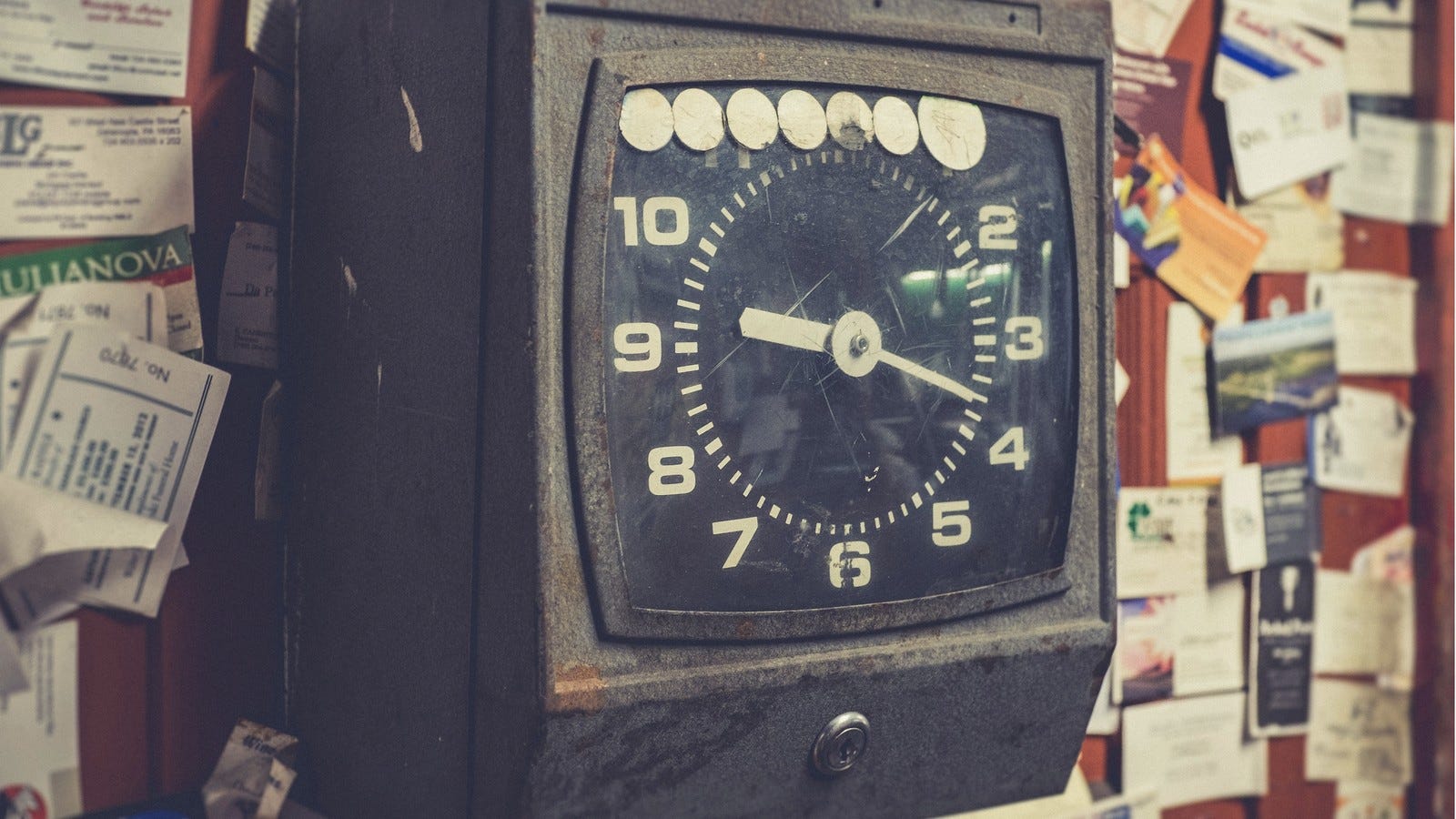
Same eight hours on the punch card. Different shifts.
Now imagine that the second shift started at 4pm Monday, 7pm Tuesday, and 9am Wednesday.
Sound familiar?
The second shift, that’s non-restorative sleep.
One of the biggest disruptors of our sleep is actually something different from stress and alcohol.
It is sleep timing and it interacts with your circadian rhythm.
We constantly bargain with ourselves, promising ourselves more sleep tomorrow or a payback on the weekend.
While a baseline of hours is needed, another important factor is the time we go to bed and when we wake up.
The most irregular sleepers were 26 percent more likely to have a major cardiovascular event. This is observational, so it shows a pattern rather than proving the cause. It also tracked 72,269 people with devices rather than questionnaires, which is unusually good for this kind of study.2
Your body needs consistency. It needs to know that sleep is coming.
Dramatically changing your sleep can be like repeatedly changing your time zone.
I started putting these ideas into practice and my sleep improved.
The minute I started guarding my sleep timing on both sides, the change became noticeable.
I went to bed 90 minutes after work each day and treated that as my bedtime.
I then set the alarm for the same time every day, even on the weekends.
I found that the wake-up consistency was more important than bedtime even though I protected both.
I paired the wake-up with getting outdoor exposure to help sunlight set my circadian clock.
The days that the job interrupted on either side I did my best to stay within 60-90 minutes of my optimal timing.
Once sleep stopped being the afterthought, everything else started arranging itself around it.
When you make things non-negotiable, they become more successful.
I had several things that needed to change.
Sleep was the one I couldn’t run from. It became one of the few things I could control.
Someone once told me, “This is what getting older feels like.”
Looking back, I don’t think it was.
My body spent years trying to sleep on a schedule that rarely stayed the same.
There were even stretches where I got the hours. The problem was I never had the consistency.
The morning I couldn’t explain earlier… It wasn’t that eight hours was the wrong number.
I was sleeping.
My body just never knew when that sleep was coming.
Live well,
Nathan
I’ve watched people in this industry take the same instinct much further than I did, and sometimes somewhere much darker. I feel grateful this is where it stopped for me. If any of this sounds familiar: SAMHSA National Helpline (U.S.): 1-800-662-4357 (HELP). Free, confidential, 24/7 treatment referral and information for mental health and substance use disorders.
Educational only — not medical advice. Consult your physician before changing your health, diet, or exercise routine.
What’s the thing that wrecks your schedule?
Chaput J-P, Biswas RK, Ahmadi M, et al. Sleep regularity and major adverse cardiovascular events: a device-based prospective study in 72,269 UK adults. Journal of Epidemiology & Community Health. 2025;79(4):257–264. Irregular sleepers: HR 1.26, 95% CI 1.16–1.37. Observational study — sleep regularity was associated with, not shown to cause, cardiovascular events. https://doi.org/10.1136/jech-2024-222795
excellent read. As I look at this at 2:13 in the morning, after waking up after having gone to bed at 10:30 PM.
hoping your tips will help my sometimes battle with insomnia.
Thanks for sharing.