

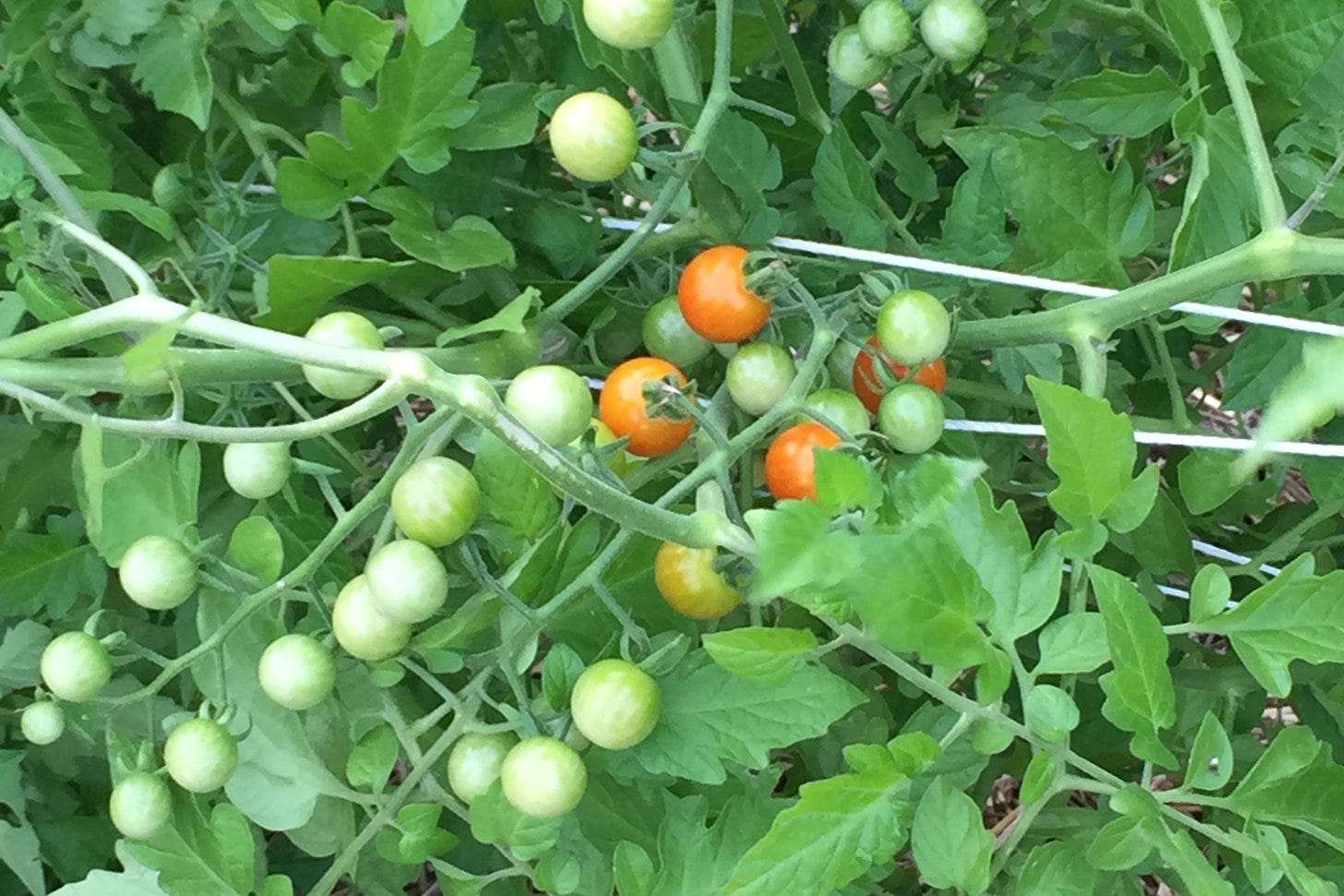
Take me back.
Summer.
Sitting on my papa’s roof in California with a salt shaker.
The tomatoes loved the Cali sunshine as much as I did.
We would admire each for its ripeness and color, while looking for our next victim.
The height of the season.
The perfect balance of sweetness, acidity, aesthetics, temperature and flavor.
A good tomato is a celebration of summer.
A vibe.
The feeling that it can’t be more perfect or nutritious.
Is food actually more nutritious when it is in season?
This is the third article in a four-part series about seasonal eating:
Part 1: Whether fresh, frozen, stored or imported is best.
Part 2: What “in season” means in a global food system.
Part 3: Whether seasonal produce is actually more nutritious. (You’re here.)
Part 4: How much seasonality should influence what we buy and eat.
Part 4 brings it all together.
Subscribe free and I’ll send it to you.
More Nutritious Than What?
“More nutritious” only means something when you say: than what?
This article asks a sharper question: is the same spinach more nutritious in winter than in summer?
Spinach likes a cool growing season. Here in Portugal, with our mild winters, it thrives. But does the season change what’s inside it?
In a 2018 study, researchers bought spinach from the same local stores three times every season. They kept this up for one to two years, measuring vitamin C in each purchase.1
The differences were dramatic:
Average vitamin C:
Winter: 43.6 mg per 100 g
Spring: 29.8 mg
Summer/fall: 18.0 mg
The winter spinach contained about 142% more vitamin C than the summer/fall spinach. More revealing, individual samples ranged from 9 to 66 mg per 100g.
A sevenfold difference.
Potatoes from the same study went the opposite direction:
Summer/fall: 15.6 mg vitamin C per 100 g
Winter/spring: 10.6 mg
About 47% higher in summer/fall.
Seasons change nutrients, then? Not quite. The study shows that the numbers we treat as fixed aren’t fixed at all. It can’t show why. “Winter spinach” here means spinach bought in winter. As I wrote in Part 2, that tells you nothing about where it grew or how.
So what actually changes with the season?
Winter and summer spinach are not the same thing. They can differ in variety, sunlight, temperature, and how mature they were when picked. After harvest, the time spent in transport, refrigeration and storage keeps changing them.
Season isn’t one variable. It’s a collection of variables changing at the same time.
Food Isn’t a Formula
Beefsteak, Roma, and cherry tomatoes aren’t merely different shapes, colors, and flavors. They are genetically different and the chemistry can differ too. Genetics are just one piece. The growing environment is another: temperature, light, access to water and stress all shape how the fruit grows and matures.
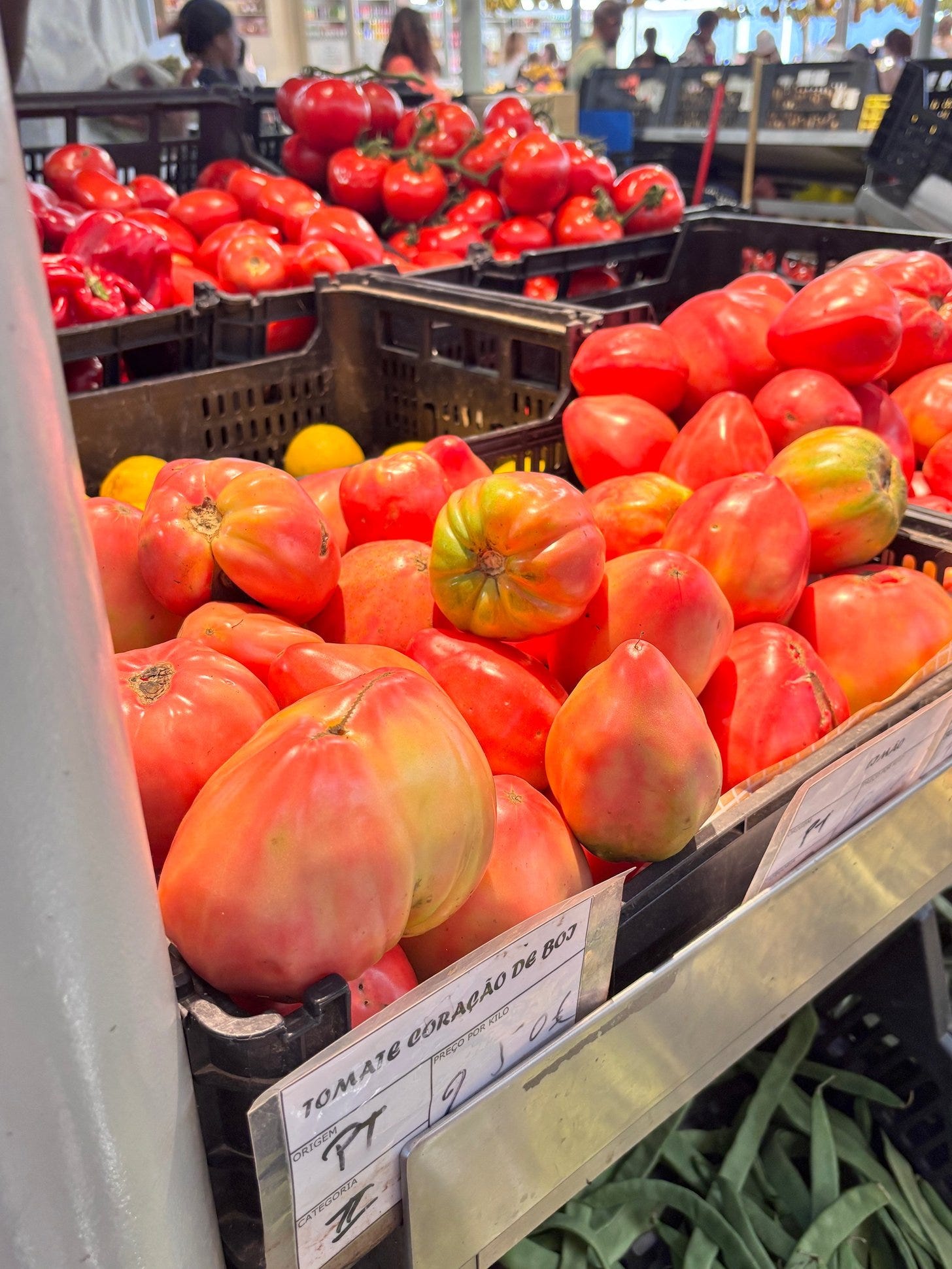
Food isn’t manufactured to an exact formula.
One plausible reason for higher vitamin C in winter spinach: cold.
In a Japanese study, when the minimum air temperature in the 10 days before harvest dropped below 5°C, spinach vitamin C rose sharply. It went from about 50-70 mg to as high as 175 mg per 100g.2
This is a possible explanation, not proof.
The plant responds to temperature, not the month.
So does winter spinach have more vitamin C? In that market, yes. The why is still a good guess, not a fact.
Ripeness Matters
Then there is when it’s picked.
If only produce stayed on the plant until we were ready. Commercially, it has to survive multiple processes, so there’s pressure to pick early.
As a tomato ripens, its sugars, acids, color, texture, aroma, and vitamin C all change. Tomatoes harvested ripe contain more vitamin C than tomatoes picked green and ripened later.3
Our roof tomato had all of that. It was also probably a different fruit.
Many modern commercial tomatoes have lost flavor compared with older varieties.4
More ripeness doesn’t automatically mean more nutrients.
A summer tomato on my papa’s roof didn’t need to survive a week of logistics. It only needed to survive the trip from the stem to the salt shaker.
In Part 2, I asked whether a tunnel tomato, a South African plum and a field-grown fig were all more nutritious.
The honest answer: I couldn’t find a study that compares them, and the label wouldn’t tell you anyway.
It depends on the variety and how ripe it was when picked. The growing conditions and time since the harvest matter too.
“Tunnel” tells you no more than “winter” did for the spinach.
The season is one clue. It’s not the answer.
Chef’s tip: Let tomatoes finish ripening on the counter at room temperature, and keep them out of the fridge. Cold dulls their flavor and can speed vitamin C loss.
Nutrition isn’t frozen the moment food is picked. Different nutrients change at different speeds. Some fall, some hold steady, and a few can even rise.
We tend to picture nutrient loss like a phone battery draining. It’s closer to a stereo equalizer, with each setting moving on its own.

In Part 1, I looked at what happens after harvest, including why frozen can hold its own against fresh. The short version: time, temperature, and handling keep changing nutrients long after the calendar says “in season.”
Does the Difference Matter?
The study compared its results with a 90 mg daily reference for vitamin C.5 100g of winter spinach gives you roughly half of that. Summer spinach gives you a fifth.
For perspective, the oranges in the same study had more vitamin C on average, in every season, than its winter spinach did.
The difference is real.
But nobody only eats spinach.
And more vitamin C in the food doesn’t prove better health in the person eating it. That would take long-term studies of people who eat seasonally. I couldn’t find any.
Back to Papa’s Roof
The roof had everything.
Sunshine, warmth, and a cooling afternoon breeze.
Picked and eaten the same day.
Sometimes before we got down the ladder.
Those tomatoes were better for ripeness and memories.
We never measured the nutrients.
But after 25 years in kitchens, I learned what peak season usually does deliver. Flavor. A tomato picked in July almost always tastes better than one picked green for a winter shelf. Nutrients may be unpredictable, but taste usually isn’t.
On nutrition, here’s where the evidence lands:
Nutrition numbers are averages, not promises. Spinach from the same stores ranged from 9 to 66 mg of vitamin C.
The month is a clue, not the cause. Variety, weather, ripeness and time since harvest decide what’s inside.
A difference on paper isn’t a difference in your health. What matters is your whole plate, not one vegetable’s season.
The part you control starts at your fridge. Keep greens cold, and eat them within a few days and cook them briefly.
You can’t see any of this on the shelf. So if you can’t shop by nutrient content, what should guide what you buy? That’s Part 4.
What food do you only buy when in season?
Live well,
Nathan
Educational only, not medical advice. Consult your physician before changing your health, diet, or exercise routine.
SOURCES
Phillips, K. M., Tarrago-Trani, M. T., McGinty, R. C., Rasor, A. S., Haytowitz, D. B., & Pehrsson, P. R. (2018). “Seasonal variability of the vitamin C content of fresh fruits and vegetables in a local retail market.” Journal of the Science of Food and Agriculture, 98(11), 4191–4204. https://doi.org/10.1002/jsfa.8941
Tamura, A. (2004). “Effect of Air Temperature on the Content of Sugar and Vitamin C of Spinach and Komatsuna.” Horticultural Research (Japan), 3(2), 187–190. https://www.jstage.jst.go.jp/article/hrj/3/2/3_2_187/_article
Lee, S. K., & Kader, A. A. (2000). “Preharvest and postharvest factors influencing vitamin C content of horticultural crops.” Postharvest Biology and Technology, 20(3), 207–220. https://doi.org/10.1016/S0925-5214(00)00133-2
Tieman, D., et al. (2017). “A chemical genetic roadmap to improved tomato flavor.” Science, 355(6323), 391–394. https://doi.org/10.1126/science.aal1556
U.S. Food and Drug Administration. “Daily Value on the Nutrition and Supplement Facts Labels.” Vitamin C: 90 mg. https://www.fda.gov/food/nutrition-facts-label/daily-value-nutrition-and-supplement-facts-labels
Just subscribed! Always learning from you!
Just subscribed after reading your celebration of California tomatoes and your comment on the taste of seasonal and freshly picked.