

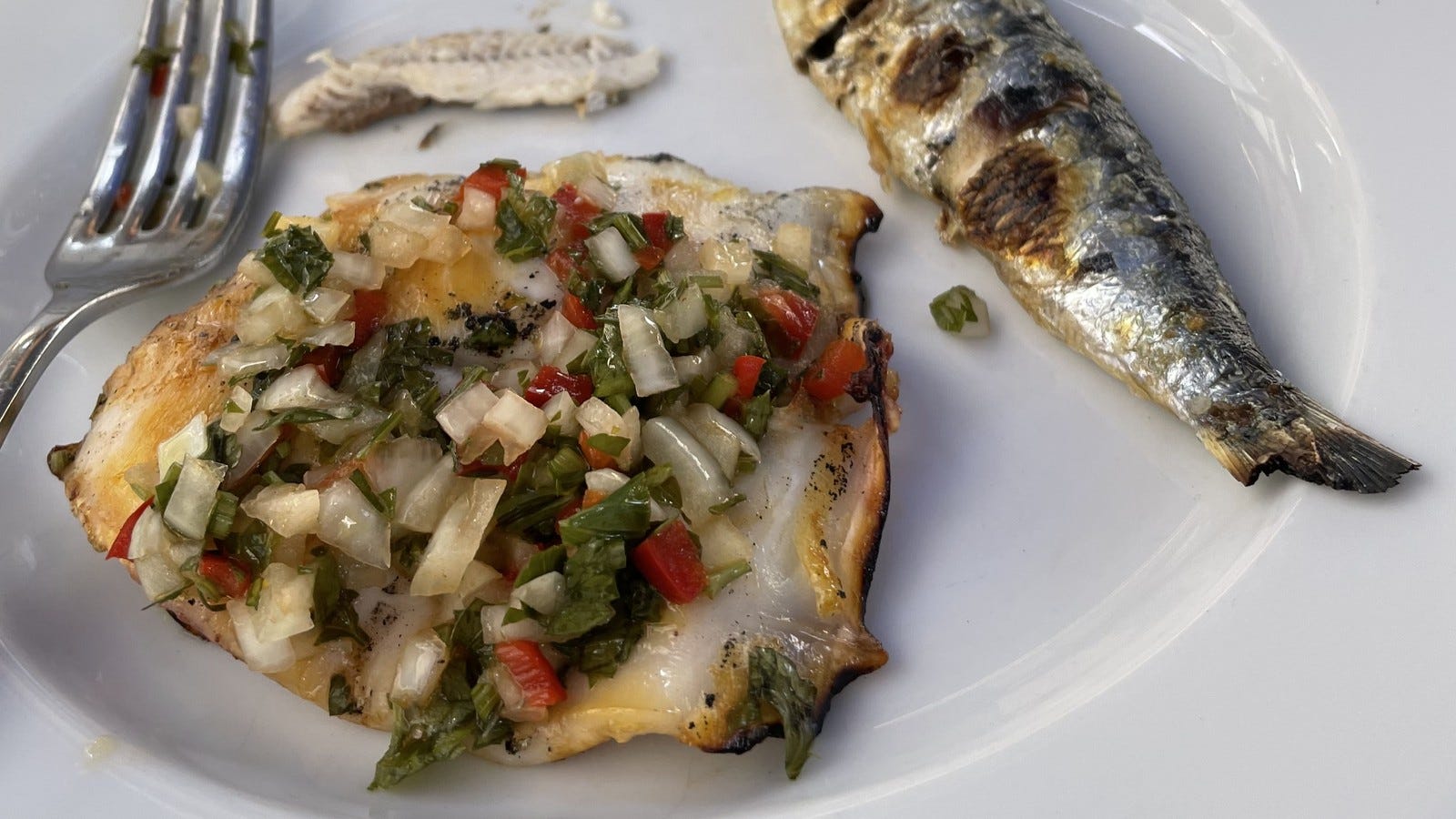
There is a version of eating that looks healthy from the outside.
I was surrounded by food I intimately understood. I spent decades learning what makes it work. I tasted and moved constantly. I knew more about what was on that plate than almost anyone.
I spent a career inside that version and I was wrong about something fundamental the entire time. The belief I carried through all the openings, private dinners, and menu changes was that if you move enough, the food stops mattering as much.
It wasn’t just me. Most of the industry holds this thought and most still do.
Early in my career I ate the way kitchens eat. Cold staff meals in a hallway or dry storage closet. Food devoured behind the line between service. A steak burrito was eaten at midnight in a few bites on the way out. Eating was an afterthought to a life that was always too full to stop.
Later, I was the one sitting in the dining room approving menu changes. Selling new dishes to senior executives over a proper tasting. From the outside it looked like I had figured something out but that was often the first thing I had eaten all day. I was still running on cortisol and espresso lattes. The setting had changed even though the body was the same.
High stress and a few hours of sleep. Mainlining espresso to fill in where energy should have been. A stomach that complained regularly and got ignored every time. I told myself all the movement cancelled it out. That the physical intensity of a kitchen shift bought me something metabolically. It seemed like a good story but I never looked too hard at whether it was true.
Then I went to Europe. Several times, over several years.
The food was different but what mattered more were the things I barely noticed at the time.
The thirty minutes of company before you ordered. The two hour meals. The sharing of multiple dishes in the center of the table. The long walk home afterwards.
My weight started coming down and the inflammation had settled. The stomach that had been complaining for years suddenly went quiet and my skin looked much better. When I looked in the mirror I looked younger and I felt good before noon and coffee.
After the first trip I slipped straight back into old patterns. All the symptoms returned quickly and I was too busy to stop and address it. That pattern repeated itself across multiple trips before I was willing to accept what it was telling me.
The body was speaking clearly every time. I just did not have the bandwidth to hear it.
When I finally accepted what Europe had been showing me, I stopped looking for a better diet and started changing how I ate.
I brought food to work instead of waiting until I was starving. I stopped eating late at night. I gave my body long stretches without food. None of it felt dramatic at the time. The alcohol was the last thing I looked at and the first thing that made a measurable difference when I pulled back. I am not saying I stopped. I am saying I stopped using it the way I had been using espresso. What surprised me was how quickly my body responded. My sleep changed first then I started waking up differently. I felt good before coffee.
I felt better tired. I even ordered a smaller chef coat.
That distinction was worth paying attention to. Exhaustion is often the cost of a full life. But exhaustion that comes with brain fog, broken sleep, digestive issues, and a body that feels like it is working against you usually has a cause. For me, the cause wasn’t how much I was doing. It was how I was eating around all of it.
The question worth sitting with is not what you are eating.
It is whether eating is a deliberate act or just another consequence of your schedule.
Live well,
Nathan
If you've made a change like this yourself, I'd like to hear what shifted first.
Educational only — not medical advice. Consult your physician before changing your health, diet, or exercise routine.
Go deeper
The personal change came first. The science gave me language for what I had been noticing.
If this topic interests you, these are three pieces worth exploring.
Later meals, worse metabolic health.
A 2023 review found that eating later in the day is linked to more metabolic disorders, while an earlier breakfast and earlier dinner improve blood sugar control.
BaHammam & Pirzada, Clocks & Sleep, 2023 → https://pmc.ncbi.nlm.nih.gov/articles/PMC10528427/Later meals, worse sleep.
A 2024 study of over 7,000 adults found that eating later in the day — and eating more often — were both linked to measurably worse sleep quality.
Yan et al., PLOS ONE, 2024 → https://journals.plos.org/plosone/article?id=10.1371%2Fjournal.pone.0308172Meal timing shapes weight and metabolism.
A 2025 review found that eating earlier in the day supports better insulin sensitivity, while late-night eating is linked to impaired glucose control and more fat storage.
Reytor-González et al., Nutrients, 2025 → https://www.mdpi.com/2072-6643/17/13/2135
Love the insight. Too many of us have “lived” running on cortisol and caffeine. Here’s to the sobremesa.